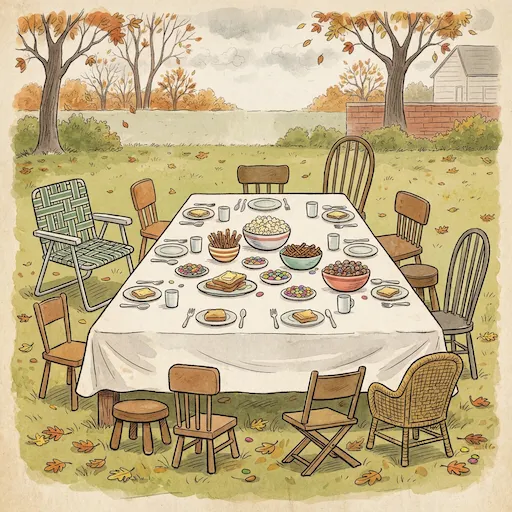
A Thanksgiving feast of toast, popcorn, and pretzel sticks might not be what most families have in mind for the holiday, but A Charlie Brown Thanksgiving reminds us that the perfect meal isn't what makes Thanksgiving meaningful, it's the people we share it with and the traditions we carry on.
However, those traditions won’t always stay the same and along with those changes can come the frustration of watching cherished traditions fade or wondering what will happen to the family heirlooms that hold so many memories.
Whether it's Mom's good china, a well-loved serving dish, or a piece of furniture that's been passed down for generations, these belonging soften mean far more than their monetary value. So, how can families make sure the things they treasure are preserved for the next generation?
Family heirlooms can carry decades of memories, becoming symbols of family history. Which is why deciding who receives them is so difficult.
Disagreements often arise because sentimental value is personal. Without a clear plan, a disagreement over a serving dish or a set of holiday decorations can create lasting tension among relatives.
When someone dies, their belongings do not automatically pass to the family member who used them most or expressed the strongest interest in them. The way property is owned, and the terms of a person's estate plan can determine what happens next.
A valid will can direct how property should be distributed. It can also name a personal representative, who is responsible for administering the estate and distributing property according to the will and Maryland law. If someone dies without a will, Maryland's intestacy laws generally determine who inherits probate property.
Not every asset necessarily passes through a will or probate. Property held jointly with a right of survivorship, certain beneficiary-designated assets, and assets held in a trust may pass under different arrangements. That is one reason it is important to look at how belongings and other assets are titled, not just what a will says.
Maryland also has rules for identifying and valuing property during estate administration. Under Maryland Code, Estates and Trusts § 7-201, a personal representative generally must prepare and file an inventory within three months after appointment. The inventory must describe covered property in reasonable detail and state its fair market value as of the date of death.
In practical terms, items such as furniture, artwork, collections, jewelry, and family heirlooms may need to be accounted for as part of the estate inventory when they are probate property subject to the requirement.
The inventory is an estate administration document. It helps identify and value property; it does not, by itself, decide which beneficiary receives each item. That question is addressed through the will, applicable law, and the estate's administration.
The precise filing requirements can depend on the type of estate and the property involved. Maryland's Register of Wills provides information about inventory filings and estate procedures.
It may seem simplest to divide belongings equally among children or other beneficiaries, but equal shares do not always translate into a fair or meaningful distribution, especially when family heirlooms are involved.
Imagine three siblings inheriting their grandmother's belongings:
· One has always treasured her china set because it was used at every Thanksgiving dinner.
· Another would rather have the grandfather clock that stood in the family home.
· The third may not feel attached to either item but may want a different keepsake.
Assigning each person an identical number of objects does not necessarily account for what those belongings mean to them.
Monetary value can make the process even more complicated:
· A valuable piece of jewelry may be easier to appraise than a well-used serving bowl, but that does not mean the bowl matters less to the family.
· However, dividing items based only on sentimental preference may overlook differences in financial value.
There is no one-size-fits-all approach. Depending on the family and the estate plan, options may include making specific gifts, allowing beneficiaries to choose items in an agreed upon order, distributing items by agreement, or selling property and dividing proceeds when appropriate. The important thing is to avoid leaving difficult decisions entirely to grieving relatives when those decisions could have been discussed and documented in advance.
A little planning can help reduce uncertainty and give family members a clearer path forward. If there are belongings you especially want certain people to receive, consider taking these steps:
1. Identify the items that matter most. Make an inventory of meaningful belongings, including family heirlooms, jewelry, artwork, collections, furniture, and other personal property.
2. Think about who should receive each item. Consider the person who would appreciate or use the item, as well as any family history or promises connected to it.
3. Talk with your family. A conversation cannot replace a legally effective estate plan, but it can help set expectations and prevent surprises.
4. Put important gifts in the appropriate estate planning documents. In Maryland, the best way to make sure an heirloom goes to the person you choose is to include that specific gift in your will. Simply telling family members what you may not be enough to make those wishes legally binding. To avoid confusion, an estate planning attorney can help ensure your wishes are clearly documented and your treasured belonging go to the right people.
5. Review your plan as life changes. Review your estate plan periodically to make sure it still reflects your wishes and accurately identifies the people and property involved.
Like Charlie Brown's unconventional Thanksgiving dinner, family traditions do not have to look the same every year to remain meaningful. The people around the table may change, the gathering place may move, and the menu may look a little different, but the memories and connections behind those traditions can still be carried forward.
Planning for family heirlooms is one way to help preserve that history. This holiday season, as families gather and reflect on the traditions they cherish, it may be a good time to think about what you hope to pass down and how to make sure it reaches the right hands.
· Maryland Code, Estates and Trusts § 7-201, Duty to Prepare and File Inventory: https://mgaleg.maryland.gov/mgawebsite/Laws/StatuteText?article=get&enactments=false§ion=7-201
· Maryland Register of Wills, Administration of Estates (inventory requirements and estate procedures): https://registers.maryland.gov/main/admin.html
· Maryland Code, Estates and Trusts § 4-107, Incorporation by Reference: https://mgaleg.maryland.gov/mgawebsite/Laws/StatuteText?article=get§ion=4-107
· Maryland Register of Wills, Facts About Wills: https://registers.maryland.gov/main/wills.html
Our offices