From the Highway to the Will: How Small Observations Spark Big Innovation
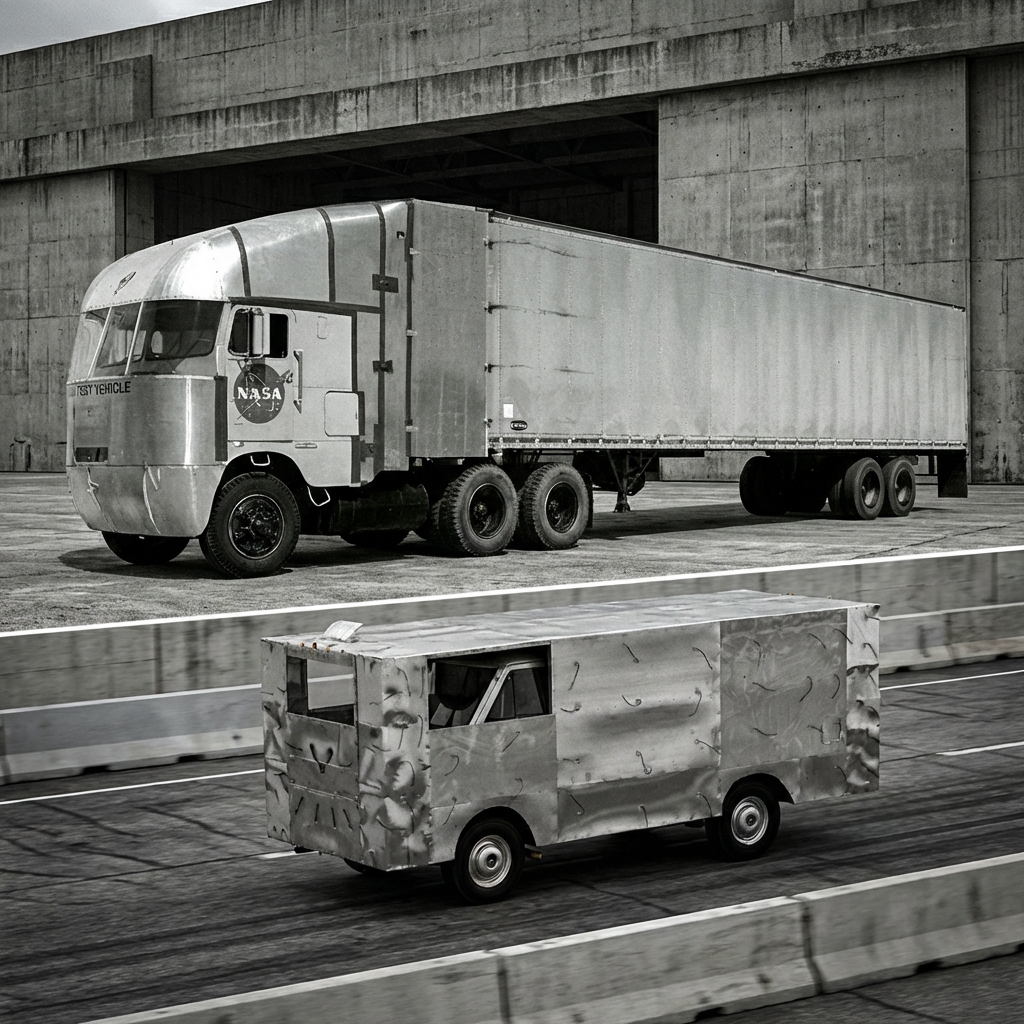
In 1973, Edwin J. Saltzman was doing something utterly ordinary. He was riding his bicycle to work at NASA’s Dryden Flight Research Center when a tractor-trailer thundered past him on the highway. The rush of air pushed him toward the shoulder, then pulled him back toward traffic with enough force to tip his bike. For most people, the moment would have ended with a shouted insult and a story to tell later. For Saltzman, it became a question.
He worked in aerodynamics. He understood airflow, drag, and inefficiency. And as he steadied himself on the roadside, he realized something most drivers never think about, trucks were fighting physics every mile they traveled.
That single observation led to a quiet revolution. NASA engineers began studying how much energy tractor-trailers wasted simply pushing air out of the way. They experimented with rounded edges, sealed undercarriages, and ways to close the gap between cab and trailer. The results were staggering. Fuel savings increased dramatically. Stability improved. Visibility improved. Tires lasted longer. By the time modern trucks filled American highways, Saltzman’s insight had been baked into their design. What looked like a minor inconvenience on a bike ride ended up reshaping an entire industry.
The legal profession does not often talk about itself in the language of innovation. Law is built on precedents, traditions, and forms that have existed for decades. But estate planning, much like trucking in the 1970s, has carried inefficiencies that most people accept without question.
For years, estate planning followed a familiar pattern. Draft a will. Maybe add a Trust. File the documents away and assume the job is done. The tools worked, but they were blunt. They did not always account for modern family structures, digital assets, blended households, long-term care costs, or the realities of how wealth actually moves today. Like those old flat-faced trucks, they got the job done, but they burned a lot of unnecessary energy along the way.
Progress in estate planning did not come from tearing down the system. It came from careful refinement. Attorneys began asking better questions. Where are the friction points? What causes families stress, delay, or expense after someone passes away? What information gets lost? What decisions are made too late?
The result was a new generation of planning tools designed to reduce drag in the same way Saltzman reduced resistance on the highway. Revocable living trusts streamline administration and avoid unnecessary court involvement. Transfer-on-death designations move assets efficiently without sacrificing control. Digital estate planning tools address online accounts and intellectual property that did not exist a generation ago. Asset protection trusts recognize that risk today looks different than it did even twenty years ago.
These refinements may seem small on paper. A designation here. A clause there. A structure that looks only slightly different from what came before. But collectively, they change the experience entirely. Families spend less time navigating court systems. Assets move with fewer delays. Disputes are reduced because intentions are clearer. Like sealing the gap between a truck’s cab and trailer, the biggest gains often come from addressing the spaces no one thought to question.
There is another parallel worth noting. When trucking became more aerodynamic, the benefits extended beyond fuel savings. Drivers felt safer. Trucks handled better in bad weather. The entire system became more stable. Modern estate planning works the same way. Thoughtful planning does not just protect assets. It protects relationships. It gives families confidence during emotionally difficult moments. It reduces the chance that grief is compounded by confusion or conflict.
Innovation does not always announce itself. Sometimes it begins with a quiet realization that something familiar is harder than it needs to be. Saltzman saw it on a bicycle ride. Estate planning attorneys see it when families struggle through outdated plans that no longer fit their lives.
The next time you see a modern truck glide down the highway, consider what it represents. Not a radical invention, but a series of smart refinements driven by one person willing to ask why things were done the way they were. The same mindset continues to shape Estate Planning today, turning traditional tools into modern solutions built for the world we actually live in.
References
American Truck Historical Society. (n.d.). NASA’s influence on truck aerodynamics.