When two spouses die within days of each other, the order of their deaths and the exact wording of their estate plans can completely rewrite who inherits. It is a quiet risk that most couples never consider. The tragic deaths of actor Gene Hackman and his wife, Betsy Arakawa, in early 2025 brought this overlooked scenario into national view, showing how a single clause can send a fortune in an unexpected direction.
Hackman was one of the most celebrated actors of his generation, a two-time Academy Award winner known for The French Connection and Unforgiven. He and Arakawa were found deceased in their Santa Fe, New Mexico home in February 2025, and investigators concluded they had died about a week apart. The details are unusual, but the underlying planning question is one every married couple, blended family, and longtime partnership shares.
What Happened to Gene Hackman's Estate?
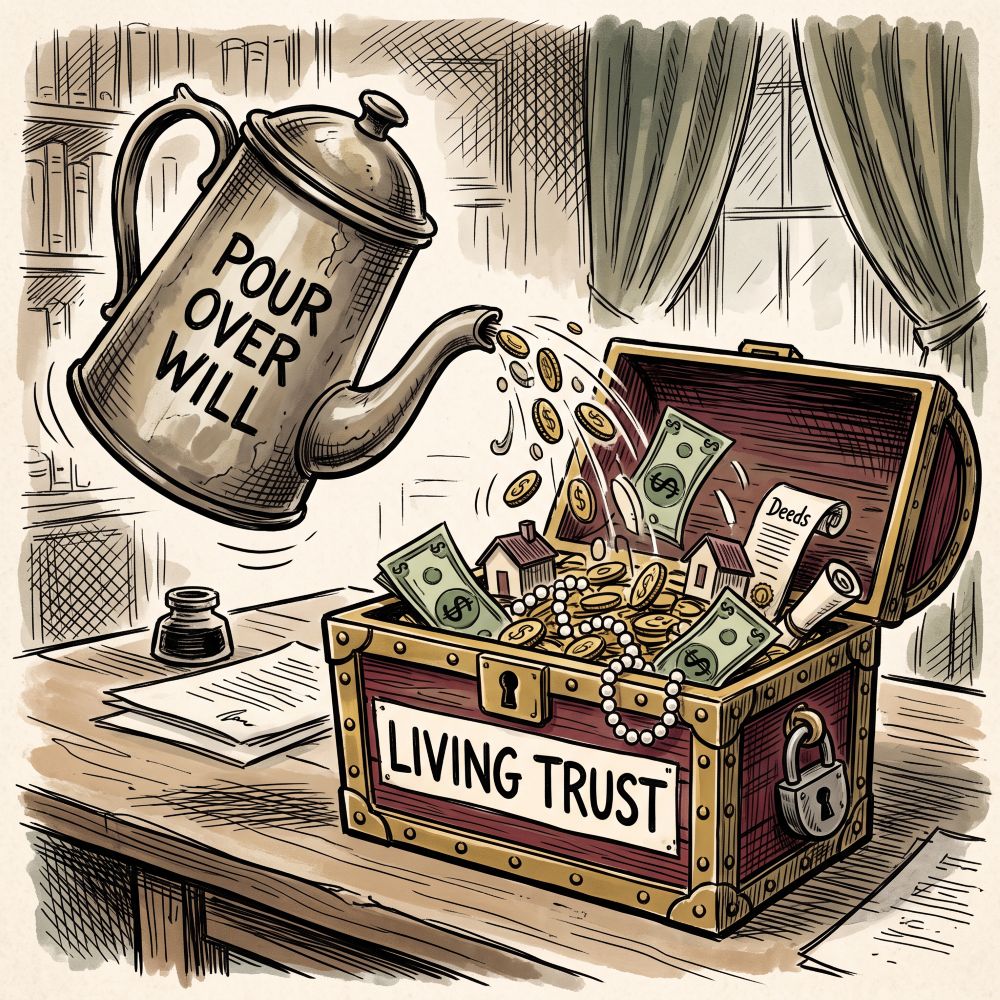
Investigators reported that Arakawa died first, around February 11, from a rare illness, while Hackman died roughly a week later on February 18 from cardiovascular disease, with advanced Alzheimer's noted as a contributing factor. Both had reportedly left their assets to each other through pour-over wills that funneled property into living trusts. On paper the arrangement looked straightforward, but the timing created a puzzle.
Arakawa's will reportedly treated the couple as having died simultaneously if their deaths fell within 90 days, sending her share to charity. Because Hackman did not outlive her by that margin, that charitable path was triggered rather than a transfer to him. His roughly $80 million estate then raised a separate question: whether his three children from a prior marriage would inherit.
What Is a Simultaneous Death, and Why Does It Matter?
A simultaneous death occurs when two people, often spouses, die so close together that the order cannot be clearly established. Most states have adopted a version of the Uniform Simultaneous Death Act, which includes a 120-hour rule. Under that rule, if one person does not survive the other by at least 120 hours, each is treated as having predeceased the other, which stops assets from bouncing between two estates within a matter of hours.
This rule matters because it decides whose plan controls each asset. Rather than passing to the surviving spouse and then immediately passing again, each person's assets move directly to their own backup beneficiaries. That single distinction can change the destination of millions of dollars.
How Does the Order of Death Change Who Inherits?
When spouses die in close succession and no protective clause applies, the person who dies second briefly controls the combined estate. Their plan then dictates where everything goes, potentially cutting out the first spouse's intended heirs and, in a blended family, quietly disinheriting children from a previous marriage. The result may be the opposite of what either spouse wanted.
Establishing the order of death is not always simple. In the Hackman case, authorities relied on medical evidence and phone records to estimate each person's time of death. Families without that kind of investigation can face uncertainty, delay, and disputes over an outcome that should never rest on guesswork.
What Is a Survivorship Clause, and How Does It Protect Your Wishes?
A survivorship clause requires one spouse to outlive the other by a set period, often 30, 60, or 90 days, before inheriting. If that period is not met, the estate skips the surviving spouse and moves to the named backup beneficiaries. This is the type of provision reportedly found in Arakawa's will, giving couples control over the near-simultaneous scenario rather than leaving it to state default rules.
The clause works best when both spouses coordinate their plans and name clear contingent beneficiaries. Without a backup named, assets can fall into intestacy, where state law decides who inherits. That default may or may not match the couple's actual wishes. A well-drafted survivorship clause removes the ambiguity before it can ever arise.
What Can Blended Families Learn From This?
Blended families carry the highest stakes, because each spouse often has separate children and separate intentions. A plan that simply leaves everything to the surviving spouse can erase the other spouse's children if the timing goes wrong, the uncertainty Hackman's children reportedly faced. The lesson is that love and good intentions are not a substitute for precise drafting.
Couples in second marriages should decide together what happens if they die close in time, and they should put that decision in writing. Tools such as trusts, survivorship clauses, and clearly named contingent beneficiaries can honor both families at once, and reviewing them after any major life change keeps them current. Fine print is where those intentions either hold or collapse.
Planning for a Scenario No One Expects
No couple wants to imagine dying within days of each other, yet the possibility is real enough to plan for. The Hackman case is a reminder that the order of death and the wording of a single clause can redirect an entire legacy. Thoughtful planning, including survivorship provisions and named backup beneficiaries, helps ensure your wishes survive even the most unlikely timing.





